
Sudden swelling in the leg may sometimes be dismissed as simple fatigue. Calf tenderness may be blamed on a muscle strain. In some people, there may even be no obvious symptoms at all.
However, a blood clot that forms in a vein can lead to serious consequences if it goes unnoticed.
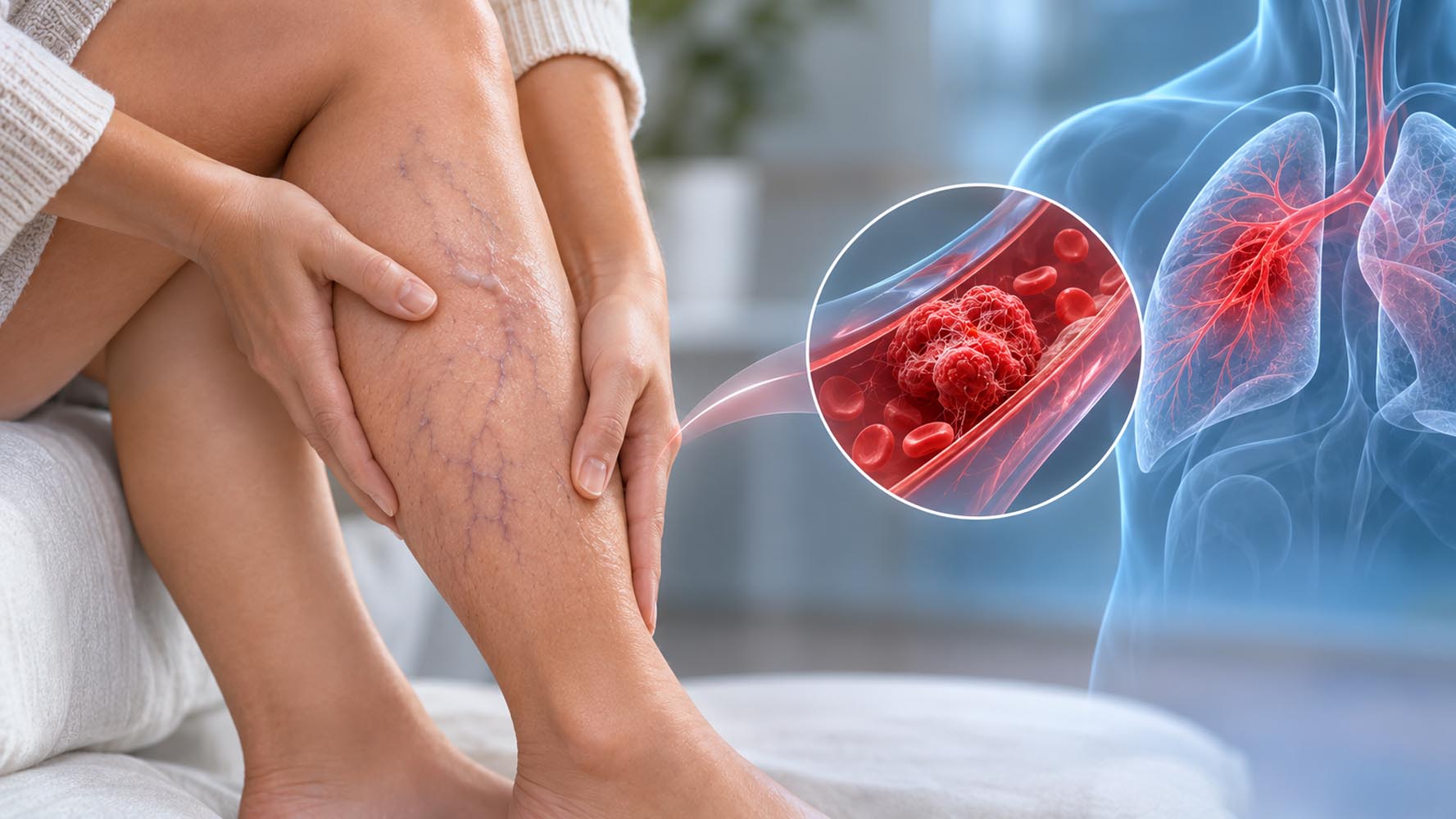
Venous thromboembolism, or VTE, refers to blood clots that develop in the venous system. It appears in two main forms: deep vein thrombosis (DVT) and pulmonary embolism (PE).
In DVT, the clot usually forms in the deep veins of the leg or pelvis. If part of the clot breaks off and travels through the bloodstream to the lungs, a pulmonary embolism can develop. Pulmonary embolism is a potentially life-threatening condition that requires urgent medical evaluation.
One of the reasons venous thromboembolism is so important is that it can sometimes progress silently.
For this reason, knowing who is at risk, which symptoms require attention, and when emergency care is needed can make a major difference.
What Is Venous Thromboembolism?
Venous thromboembolism is a disease process that begins when a blood clot forms in a vein.
It has two main forms:
- Deep Vein Thrombosis (DVT): A blood clot forms in a deep vein, most commonly in the legs.
- Pulmonary Embolism (PE): Part of a clot from a DVT breaks away, travels to the lungs, and blocks blood flow in a pulmonary artery.
DVT and pulmonary embolism are not completely separate diseases. They are different clinical manifestations of the same underlying process.
Therefore, a blood clot that starts in the leg should not be considered only a local leg problem.
How Common Is Venous Thromboembolism?
Venous thromboembolism is an important public health problem.
According to data from the U.S. Centers for Disease Control and Prevention, up to 900,000 people in the United States may be affected by venous thromboembolism each year.
More concerning is that an estimated 60,000 to 100,000 people die from the condition annually.
Pulmonary embolism can be especially serious. In some patients, sudden death may be the first sign of the condition.
These figures clearly show why early recognition of venous thromboembolism is so important.
What Is Deep Vein Thrombosis?
Deep vein thrombosis is the formation of a blood clot in the deep veins of the body.
It most commonly affects the deep veins of the:
- Calf
- Thigh
- Pelvis
More rarely, it can also occur in the deep veins of the arms.
A clot may partially or completely block blood flow inside the vein. As a result, swelling, tenderness, and skin color changes may develop in the affected limb.
However, not every DVT causes obvious symptoms.
This is one of the most important features of the condition.
Is There a Connection Between Varicose Veins and DVT?
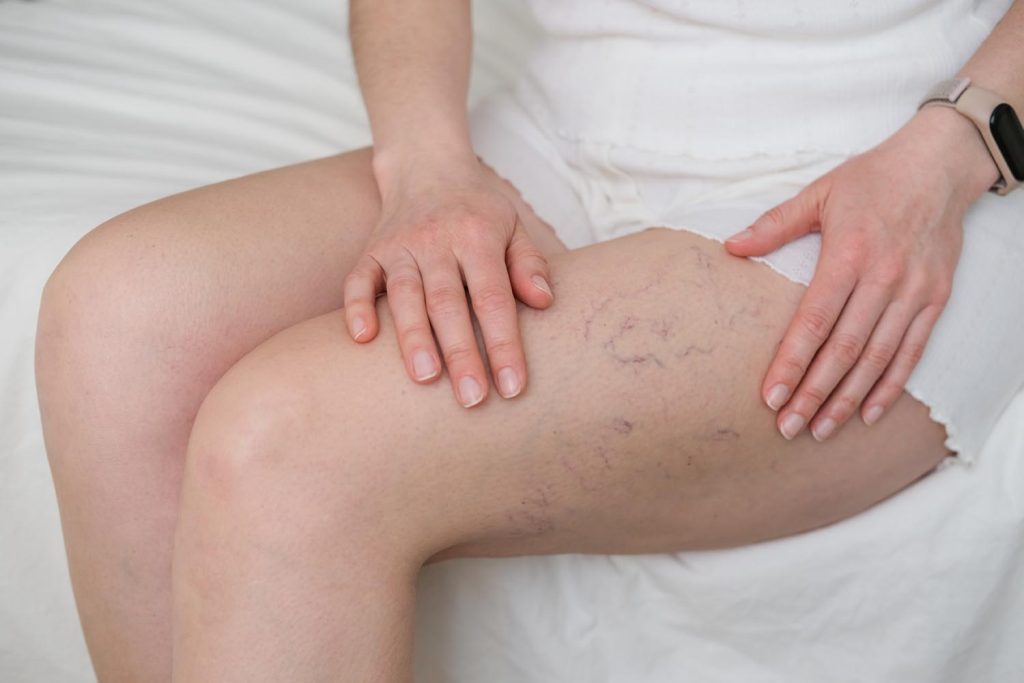
When venous insufficiency in the superficial veins (varicose veins) progresses without treatment, it may adversely affect the deep venous system in some patients and contribute to deep venous insufficiency. If insufficiency develops in the deep veins and blood flow slows, the likelihood of deep vein thrombosis (DVT) may increase, particularly in the presence of other risk factors.
For this reason, varicose veins should not be regarded as merely a cosmetic concern, and progressive venous insufficiency should be evaluated promptly.
Does DVT Always Cause Symptoms?
No.
Some cases of DVT may cause only mild symptoms or may remain completely silent.
For this reason, thinking, “My leg does not hurt, so I cannot have a blood clot,” is not reliable.
Especially in people with risk factors, newly developed one-sided swelling or unexplained leg changes should be evaluated carefully.
A silent or mildly symptomatic DVT may sometimes be discovered only after the clot has traveled to the lungs.
What Is Pulmonary Embolism?
Pulmonary embolism occurs when a blood clot that formed in a vein breaks loose and travels through the bloodstream to the lungs.
When the clot blocks a blood vessel in the lungs, both circulation and oxygenation can be seriously affected.
Pulmonary embolism may:
- Be small and limited
- Cause severe breathing difficulty
- Place strain on the right side of the heart
- Become life-threatening in some cases
For this reason, pulmonary embolism symptoms should never be ignored.
What Are the Symptoms of Pulmonary Embolism?
Common symptoms may include:
- Sudden shortness of breath
- Chest pain
- Chest pain that worsens with deep breathing
- Rapid heartbeat
- Dizziness
- Fainting
- Cough
- Coughing up blood
- Sweating
The sudden onset of these symptoms is especially important.
If sudden shortness of breath, chest pain, fainting, or coughing up blood occurs, emergency medical care should be sought immediately.
Waiting for a routine clinic appointment is not appropriate in this situation.
Why Do Blood Clots Form?
Doctors often explain clot formation using Virchow’s triad, which includes three main mechanisms.
These are:
- Slowed blood flow
- Damage to the blood vessel wall
- An increased tendency of the blood to clot
A person may have only one of these factors, but the risk becomes greater when several are present at the same time.
Why Does Inactivity Increase Blood Clot Risk?
The leg muscles help support venous circulation while walking.
In particular, when the calf muscles contract, they help push blood upward toward the heart.
When a person remains inactive for long periods, this mechanism does not work as effectively. Blood flow slows, and venous stasis may develop.
For this reason, situations such as:
- Prolonged bed rest
- Hospitalization
- Long airplane journeys
- Long car journeys
- Reduced mobility
may increase the risk of blood clots.
However, not everyone who takes a long trip needs preventive medication. Prevention should be based on individual risk factors.
Who Is at Higher Risk for Venous Thromboembolism?
Many factors can increase the risk of VTE.
These may include:
- Recent surgery
- Prolonged hospitalization
- Long periods of immobility
- Cancer and some cancer treatments
- Pregnancy
- The postpartum period
- Estrogen-containing hormone therapy
- Birth control pills
- Excess weight
- Smoking
- Older age
- Previous DVT or PE
- Inherited clotting disorders
- Family history of blood clots
When several risk factors occur together, the overall risk may rise significantly.
How Much Does Age Affect Blood Clot Risk?
Age is an important risk factor for venous thromboembolism.
Published epidemiological data suggest that approximately 60% of venous thromboembolic events occur in people aged 70 years or older.
However, this does not mean younger people are not at risk.
Even young and otherwise healthy individuals may develop VTE in the presence of factors such as:
- Surgery
- Pregnancy
- Hormone use
- Prolonged inactivity
- Inherited clotting disorders
What Are the Symptoms of DVT?
Deep vein thrombosis most commonly affects one leg.
Possible symptoms include:
- Swelling in one leg
- Calf tenderness
- Leg pain
- Increased warmth in the affected area
- Redness or discoloration
- A sensation of tightness
However, these symptoms are not specific to DVT.
Muscle injuries, lymphedema, and other conditions can cause similar symptoms.
For this reason, diagnosis should not be based on symptoms alone.
Why Is One-Sided Leg Swelling Important?
Swelling in both legs can occur for many different reasons.
However, especially new and sudden swelling in one leg is a symptom that should be evaluated for DVT.
If swelling is accompanied by:
- Calf tenderness
- Redness
- Increased warmth
- Tightness
medical evaluation should not be delayed.
The key point is that people should not try to diagnose themselves.
How Is Venous Thromboembolism Diagnosed?
Diagnosis usually follows a step-by-step approach.
First, the person’s symptoms and risk factors are assessed.
When necessary, tests may include:
- Clinical risk assessment tools
- D-dimer blood testing
- Venous Doppler ultrasound
- CT pulmonary angiography
- Ventilation/perfusion imaging
The choice of test depends on the patient’s clinical condition.
Why Is Doppler Ultrasound Important in DVT Diagnosis?
Venous Doppler ultrasound is one of the most important imaging methods used when DVT is suspected.
It can help evaluate:
- Whether the vein is open
- Blood flow within the vein
- Whether a clot is present
- The location of the clot
The examination is generally painless and does not involve radiation.
It is widely used to assess suspected DVT in the legs.
Can a D-Dimer Test Diagnose DVT on Its Own?
No.
D-dimer is a substance produced during the formation and breakdown of blood clots in the body.
In some patients, a normal D-dimer result combined with low clinical risk may help rule out DVT or PE.
However, a high D-dimer result does not automatically mean that a person definitely has a blood clot.
D-dimer can also be elevated in many other conditions.
Therefore, the result must be interpreted together with the clinical assessment.
How Is Venous Thromboembolism Treated?
Treatment depends on the location and size of the clot, the severity of symptoms, and the patient’s general health.
For most patients, the foundation of treatment is anticoagulant therapy, which reduces the blood’s tendency to form additional clots.
There is an important point to understand about anticoagulants:
They do not directly dissolve the existing clot.
Instead, they help prevent the clot from growing and reduce the risk of new clots forming. Over time, the body’s own systems break down the existing clot.
In selected patients, additional procedures may include:
- Catheter-directed clot-dissolving treatment
- Mechanical thrombectomy
- Inferior vena cava filter placement
Treatment should always be individualized.
Does the Problem Completely End After DVT Treatment?
Not always.
Even after successful DVT treatment, some people may develop long-term problems.
The clot may permanently damage the valves inside the leg veins or leave behind a persistent blockage.
As a result, blood may begin to pool in the leg.
This condition is called post-thrombotic syndrome.
What Is Post-Thrombotic Syndrome?
Post-thrombotic syndrome is a chronic venous circulation problem that can develop after DVT.
Research suggests that approximately 20% to 50% of patients, particularly those with proximal DVT, may develop post-thrombotic syndrome.
Symptoms may include:
- Persistent leg swelling
- Discomfort that worsens during the day
- A feeling of heaviness in the leg
- Skin discoloration around the ankle
- Changes in skin texture
- Venous ulcers in advanced cases
Some studies have reported that severe post-thrombotic syndrome and venous ulcers may develop in approximately 5% to 10% of patients.
For this reason, DVT should not be seen as only a temporary problem that needs treatment during the acute phase.
Can DVT Happen Again?
Yes.
Having had DVT or pulmonary embolism in the past increases the risk of developing another blood clot in the future.
For this reason, after the first clot, doctors may evaluate:
- Why the clot occurred
- How long treatment should continue
- Persistent risk factors
- Family history
- Risk of recurrence
The duration of anticoagulant treatment is not the same for every patient.
For some people, several months of treatment may be sufficient. Others may need longer treatment.
Can Venous Thromboembolism Be Prevented?
Some cases of VTE can be prevented.
Preventive measures are especially important during high-risk periods.
Helpful measures may include:
- Moving regularly during long journeys
- Performing ankle and calf exercises
- Becoming mobile as early as medically allowed after surgery or illness
- Avoiding prolonged periods in the same position
In selected high-risk patients, a physician may recommend:
- Anticoagulant medication
- Medical compression methods
However, these measures are not routinely recommended for everyone. Prevention should be based on individual risk.
What Should You Consider During Long Flights?
Sitting still for long periods during travel can slow venous blood flow.
For this reason, especially during long flights, it may help to:
- Stand up when possible
- Take short walks
- Move the ankles while seated
- Activate the calf muscles
People who have previously had DVT, have active cancer, or have major risk factors should speak with their doctor before long-distance travel.
The need for preventive medication or compression stockings should be decided individually.
Can Birth Control Pills Increase Blood Clot Risk?
Some birth control methods that contain estrogen can increase the risk of venous thromboembolism.
However, this does not mean a person should stop the medication on their own.
Risk should be assessed together with factors such as:
- Age
- Smoking
- Personal history of blood clots
- Family history
- Other health conditions
People who are concerned about clot risk should discuss their hormonal treatment with their physician.
When Should You See a Doctor?
Medical evaluation should be obtained promptly if you develop:
- New one-sided leg swelling
- Unexplained calf tenderness
- Redness in the leg
- Increased warmth in one area
- Skin discoloration
These symptoms can have other causes, but DVT should be ruled out.
On the other hand, if you develop:
- Sudden shortness of breath
- Chest pain
- Fainting
- Coughing up blood
- Sudden and severe breathing difficulty
emergency medical care should be sought immediately.
Conclusion: Do Not Underestimate a Silent Blood Clot
Venous thromboembolism is a common condition that can sometimes progress without obvious symptoms and may lead to serious complications.
Deep vein thrombosis may appear to be a problem limited to the leg, but if the clot travels to the lungs, pulmonary embolism can develop.
The problem is also not limited to the acute phase.
A significant proportion of patients who have had DVT may later develop post-thrombotic syndrome, which can lead to chronic swelling, skin changes, and venous ulcers.
For this reason, the most important steps are:
- Knowing the risk factors
- Taking new symptoms seriously
- Seeking early evaluation when DVT is suspected
- Getting emergency help for pulmonary embolism symptoms
- Following the recommended treatment and follow-up plan
Venous thromboembolism cannot always be prevented. However, early diagnosis and appropriate treatment can significantly reduce the risk of serious complications.
Frequently Asked Questions
Can a blood clot go away on its own?
The body can gradually break down a blood clot over time. However, this does not mean that a suspected clot should be left untreated. Without treatment, the clot may grow or travel to the lungs.
Does DVT always cause leg pain?
No. Some DVTs may cause only mild symptoms or no symptoms at all.
Can I fly after having DVT?
Many patients can travel once treatment has started and their clinical condition is stable. However, people who have recently had DVT should speak with their doctor before a long journey.
Can young people develop blood clots?
Yes. Older age is an important risk factor, but younger people can also develop VTE due to surgery, pregnancy, hormone use, prolonged immobility, or inherited clotting disorders.
Are DVT and varicose veins the same thing?
No. DVT is a blood clot in a deep vein. Varicose veins are a different venous condition involving enlarged superficial veins.
Do blood thinners dissolve blood clots?
Standard anticoagulants do not directly dissolve the clot. They help prevent it from growing and reduce the risk of new clots while the body gradually breaks down the existing clot.
Can leg swelling remain after DVT?
Yes. Post-thrombotic syndrome can cause persistent or recurring leg swelling, skin changes, and other chronic venous symptoms after DVT.
What should I do if I suspect a pulmonary embolism?
If you develop sudden shortness of breath, chest pain, fainting, or coughing up blood, seek emergency medical care immediately. These symptoms should not be ignored.
Internal Sources
- Prof. Dr. Semih Barlas official web site
- Modern Treatment Methods for Varicose Veins
- Understanding Varicose Veins and Their Causes
- Contact
External Sources